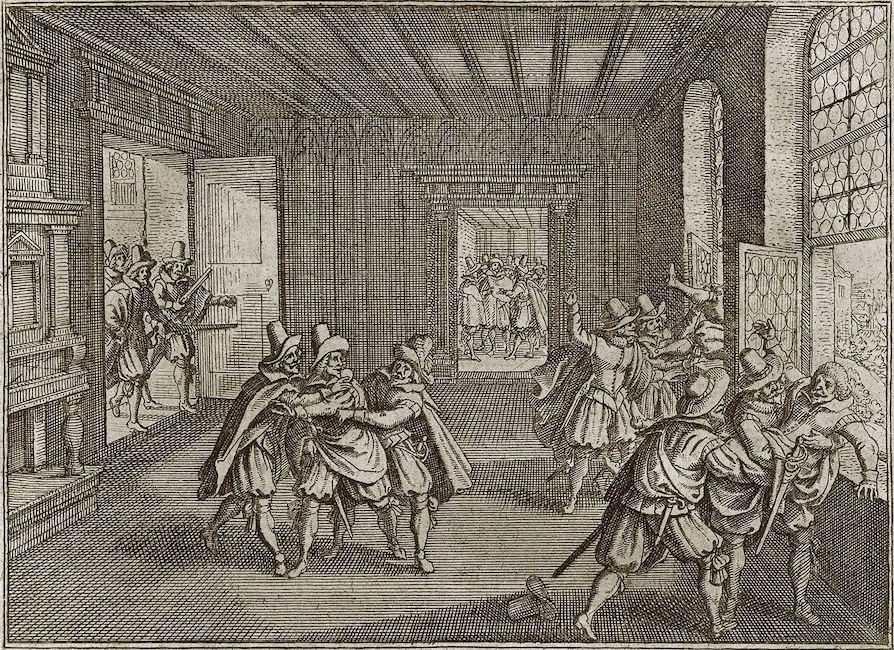
The defenestration of three Catholics from the high windows of the castle in Prague in May 1618 helped precipitate the Thirty Years War. But it wasn’t the first time the people of Bohemia had resorted to this distinctive method of extra-judicial killing.
On the first occasion, two centuries earlier, the proximate causes were the same: politico-religious hatreds. The Bohemian Wycliffite reformer Jan Hus had been burned at the stake by the Council of Constance in 1415, but his death had done nothing to halt his movement.
Wenceslas IV, alarmed by their growth, limited the number of churches they could use. Many Hussites took to holding their services on hilltops outside the cities. But the sometime Premonstratensian monk, Jan Zelivsky, took things further.
On Sunday 30 July 1419, Zelivsky preached a sermon at his current church, the Carmelite Mother of God of the Snows in Prague New Town. Among his likely texts was this from Ezekiel: “I will bring a sword upon you, and I will destroy your high places”.
He then led his congregation to the New Town Hall, just a few minutes away. Probably he had always intended to occupy it. Probably he hadn’t expected anyone to be there during mass on a Sunday morning. But there were 13 men, including the burgomaster, the magistrate, three councillors and five citizens. Where we have their occupations they are tradesmen, merchants: a tanner, a fuller, a wood-dealer.
What happened next is a little unclear. Some reports say the Hussites were abused by those inside the town hall, that a stone was thrown at the monstrance that Zelivsky carried. But the building was stormed.
All but one of those inside were thrown down on the stones outside. Some survived the fall. They were beaten to death. Zelivsky, it is said, stood by, encouraging his followers. One councillor, the fuller Rehak, died inside. One source has him running from the mob into the kitchens; it doesn’t say how he was killed.
Wenceslas’s shock and rage was such that he died of a stroke two weeks later, ‘roaring like a lion’ in pain.
This is a slightly extended version of a piece first appeared in the July 2022 issue of History Today. The illustration is a woodcut depicting the defenestration of 1618.
Like this? You can read more of Mathew’s History Today Months Past pieces here.
 Mathew Lyons
Leave a comment