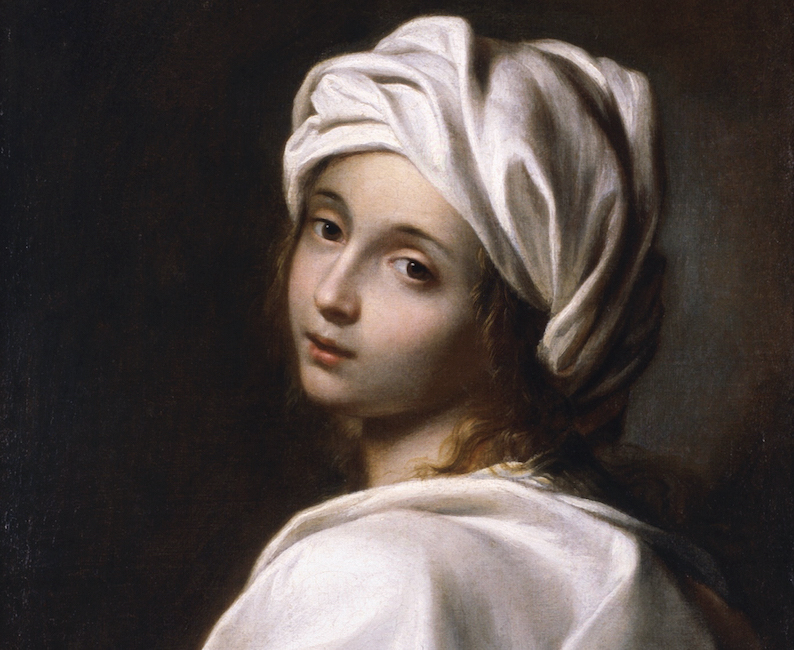
Charles Dickens, visiting Rome early in 1845, found himself haunted by a painting he saw. It was, he said, “almost impossible to be forgotten”. It was of a young woman in white, with a white turban; she is looking back over her left shoulder towards the artist. Dickens saw in her eyes “celestial hope, and a beautiful sorrow, and a desolate earthly helplessness”.
The painting’s subject was Beatrice Cenci, he learned. She had been executed, aged 22, along with her mother and her brother, for the murder of her father, Count Francesco Cenci. Some historians have cast doubt on Beatrice’s claim, made at trial, that Francesco raped her; there is no doubt that he was a violent and abusive husband and father.
Dickens was only one in a long line of men moved by the painting. “The image of Beatrice haunted me after seeing her portrait,” the poet Shelley had said, explaining the inspiration behind his five-act tragedy The Cenci.
However Beatrice’s story had been forgotten until it was resurrected by the historian Ludovico Antonio Muratori in his Annals of Italy in the 1740s, and the portrait wasn’t connected to her until the late 18th century. It was long attributed to the Bolognese artist, Guido Reni; Dickens heard the tradition that Reni had visited Beatrice in her prison cell, or else glimpsed her on her way to execution.
The painting is now thought to be by Ginevra Cantofoli, one of several forgotten women artists in Bologna during the Baroque. Perhaps these two things – an execution and an erasure – go together. Even as the painting excited Romantic projections of one woman’s tragic suffering, it served to obscure the work and career of another woman entirely.
This is a slightly extended version of a piece that first appeared in the September 2022 issue of History Today.
Like this? You can read more of Mathew’s History Today Months Past pieces here.
 Mathew Lyons
Leave a comment