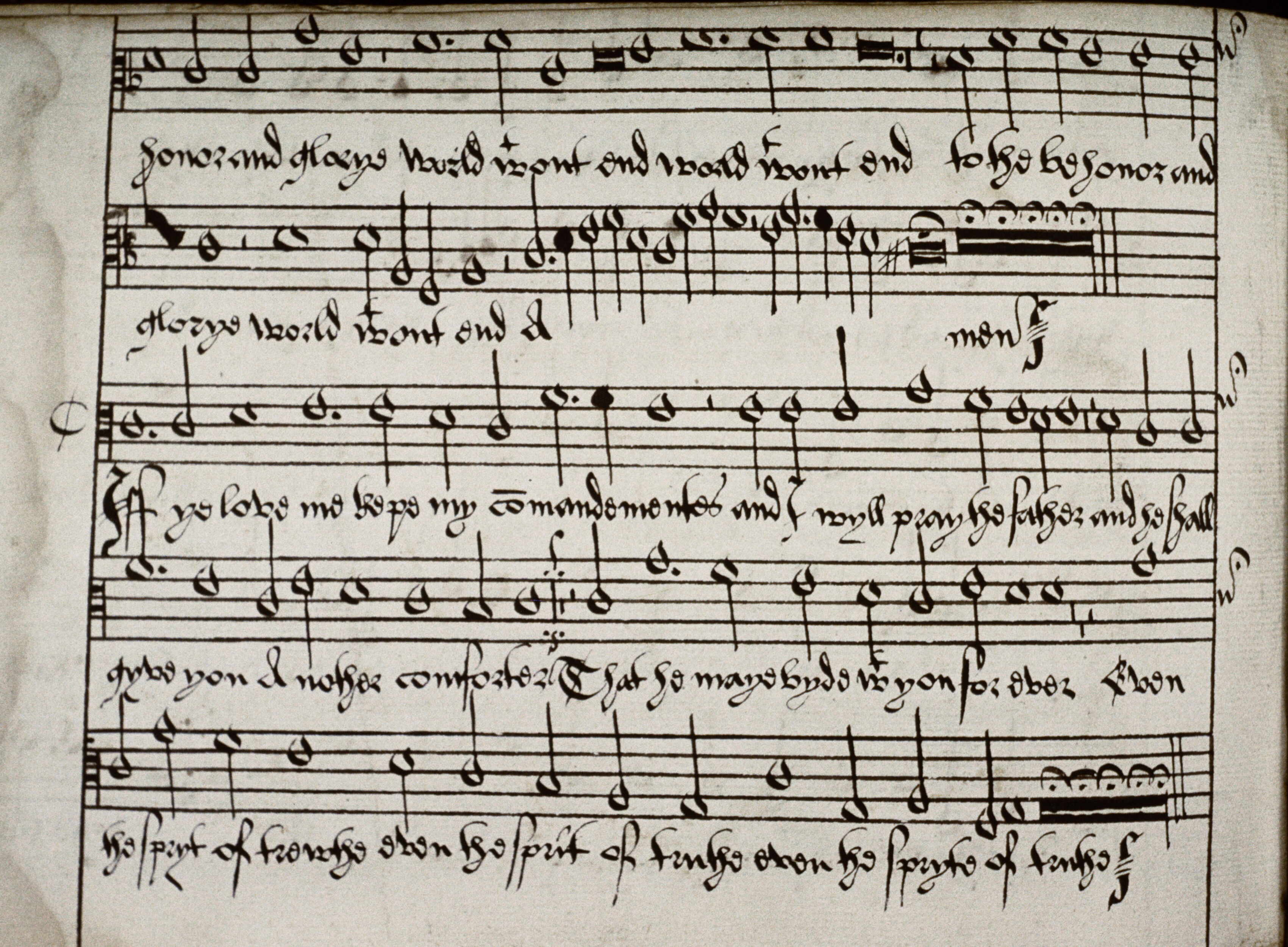
Thomas Tallis, one of the first and greatest composers of English protestant church music, began his career in monastic service.
Born around 1505, the first record of him is as an organist at the small Benedictine priory in Dover. Presumably he stayed until its suppression in 1535. He is next seen in the choir at St Mary-at-Hill in Billingsgate, London, for about a year, before joining the Augustinian abbey at Waltham, in Essex, where he was the highest paid of its sixty lay employees – although his precise role is unknown. He was therefore among the very last servants of English monasticism to lose his position when the abbey was surrendered in March 1540. He was sent away with 40 shillings – although he also seems to have come away with a book of music theory from the abbey’s library.
After a spell at Canterbury Cathedral, he joined the Chapel Royal in around 1543–4. He remained there until his death on 23 November 1585 composing music for Henry VIII, Edward VI, Mary I and Elizabeth I. But it is debatable whether he was ever at peace with the new religious settlement. His best known work, for instance, the forty-voice motet Spem in alium, uses the Catholic liturgy. It is connected to and was perhaps commissioned by Thomas Howard, fourth duke of Norfolk, who was executed for treason in 1572.
Tallis was buried in St Alfege, Greenwich, where his memorial survived until the Second World War. Its last lines ran: “As he did Lyve, so also did he dy,/In myld and quyet Sort (O! happy Man).” Quite an achievement someone who lived through the tumults of mid-century Tudor religion.
This is an extended version of a piece that first appeared in the November 2022 issue of History Today.
Like this? You can read more of Mathew’s History Today Months Past pieces here.
 Mathew Lyons
Leave a comment