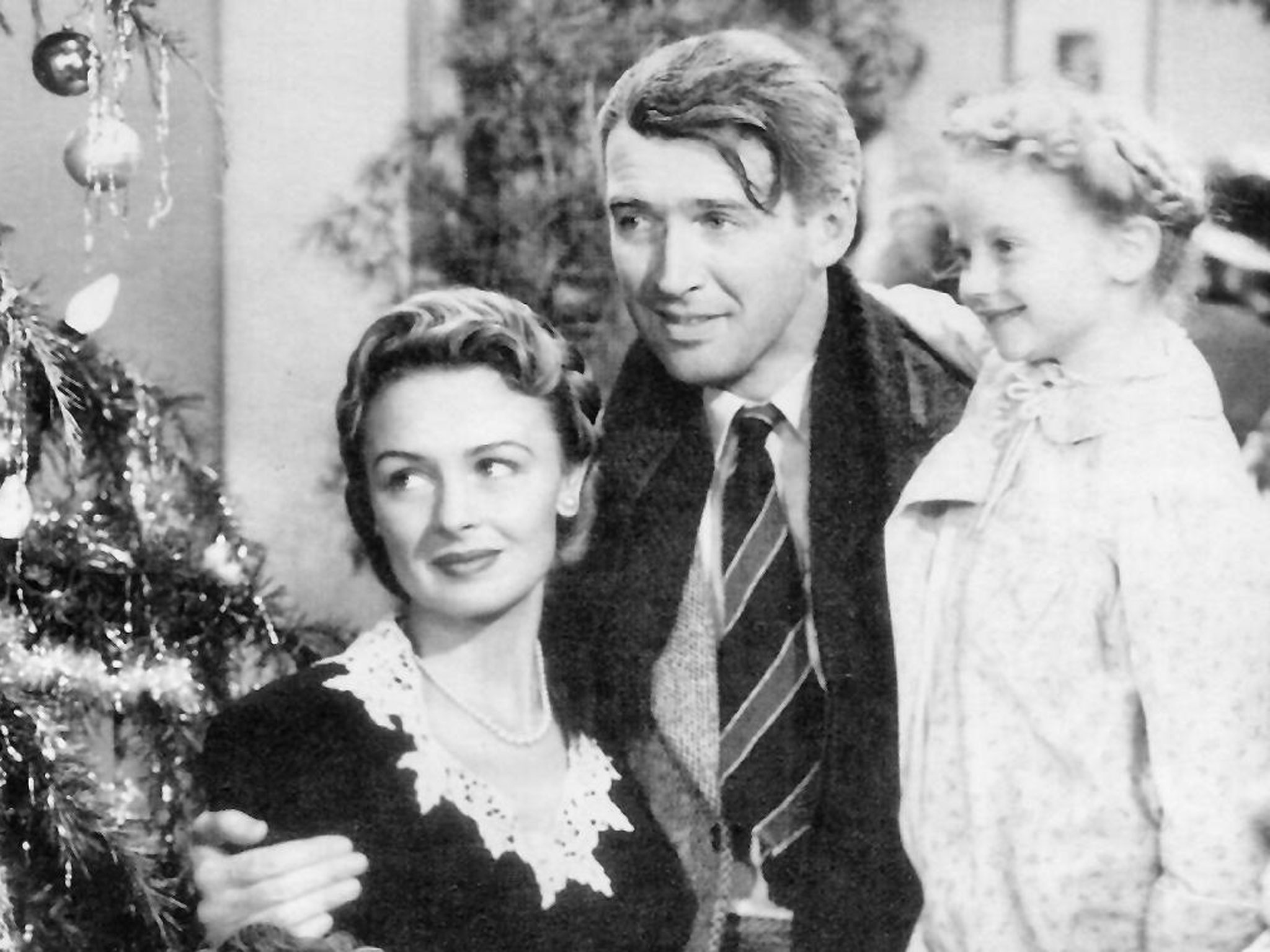
The idea came to him while shaving, he said. But it would be five years before American Civil War historian Philip van Doren Stern finished ‘The Greatest Gift’, his sweet, slight fantasy about a man contemplating suicide who get the chance to see what his small-town world would be like if he had never been born. And even then he couldn’t find a publisher. Instead he printed up 200 copies in the form of a Christmas card and sent it out to friends at the end of 1943.
Somehow Cary Grant saw it and liked it. RKO bought the rights for him for $10,000. But three scripts and three writers later couldn’t find a way to unlock the story’s potential. RKO sold the rights on to director Frank Capra, newly back from the war and deeply affected by the experience. “Just to see those trembling people in London during the Blitz, poor sick old ladies crying, crying in terror… children. There’s got to be something better,” he recalled.
It took five further writers, including Capra himself and Dorothy Parker, brought in for a final script polish, to deliver what was now called It’s A Wonderful Life. Shooting began on 8 April 1946. The film was shot in sequence, its star, James Stewart, remembered. Its four-acre set at Encino Ranch in California included a 300-yard-long main street. The night scenes used enough electricity to light a city of 5,000. The snowstorm at the film’s heart was shot in 90-degree heat; the falling snow was a mix of fire-extinguisher foam, soap and water. “I am in love with weather. Movie weather, I mean,” Capra said.
The film was released on 20 December 1946 to mixed reviews and mediocre returns. Its climb to classic status wouldn’t begin until the 1970s. Asked about its meaning, Capra once said it was about “Those kinds of people [who] counteract all the meanness there is in the world. They will go down fighting for a lost cause, and you cheer for them. That’s the closest I can get to heaven.”
This is an extended version of a piece that first appeared in the December 2022 issue of History Today.
Like this? You can read more of Mathew’s History Today Months Past pieces here.
 Mathew Lyons
Leave a comment