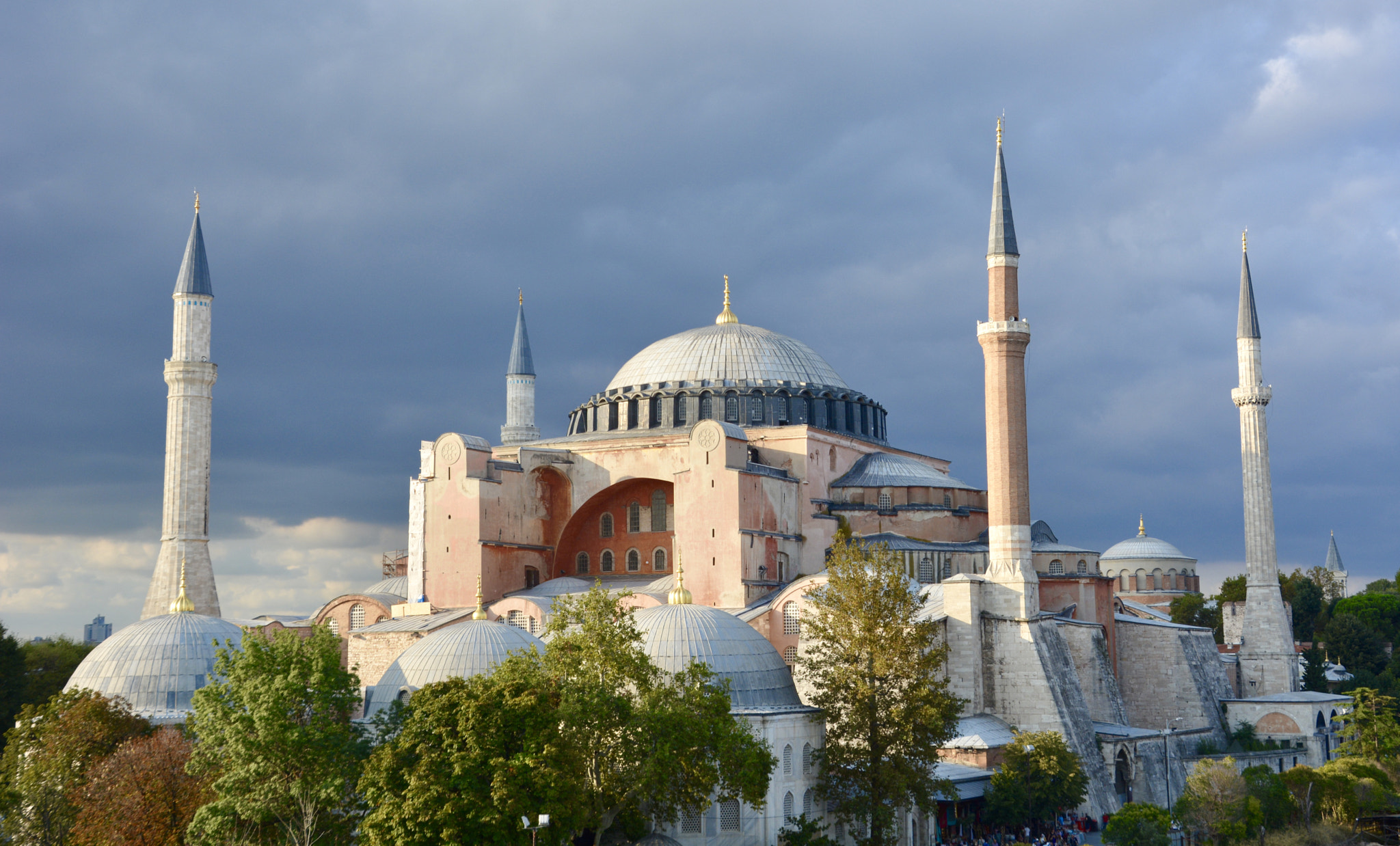
There were already several cracks in the dome of Justinian’s church of Santa Sophia, in Constantinople, and it was barely twenty years old. Two great earthquakes, in October and December 557, had done the damage. Some discerned a divine hand at work: “the shocks… had occurred through God’s benevolence”, John Malalas, a pious contemporary chronicler, wrote.
But six months later, towards the end of the morning of Tuesday 7 May 558, further disaster struck. A team of men from Isauria in Central Anatolia were repairing the cracks when the top of the eastern vault, and the eastern half of the dome, collapsed. “Thick clouds of dust darkened the midday sun,” Paul the Silentiary, a Byzantine court official, wrote. The vault above the altar and the altar itself were crushed by falling masonry. When the dust settled, part of the dome could be seen, newly open to daylight and seemingly suspended in mid-air. It was, Paul said, a wonder to behold.
God’s hand was less readily discernible however. “The engineers were blamed,” the chronicler Theophanes wrote. “To avoid expense, they had not secured the suspension from beneath but had bored through the piers that supported the dome.”
The church was rededicated on 24 December 562 with a new dome, some twenty feet taller. Justinian and the patriarch Eutychius rode together through the in a chariot while the people chanted the psalm, ‘Lift up your gates’.
This is a slightly extended version of a piece that first appeared in the May 2023 issue of History Today.
Like this? You can read more of Mathew’s History Today Months Past pieces here.
 Mathew Lyons
Leave a comment