Women, wrote the feminist Charlotte Stopes in 1890, were suffering under “the Despotism of the goddess Fashion… the most powerful goddess on the earth”. Stopes was a member of the Rational Dress Society, which campaigned for health, comfort and beauty in women’s clothing – and practicality, too. Stopes knew many women, she wrote, who began the day by first putting on walking boots, because that became impossible once corsets were tightly laced.
But Eliza King’s Rational Dress Association went further: it aimed for reform of both women and men’s clothing. For the latter, it decried the chimney-pot hat and the swallow-tail coat. (King was critical too of men who imitated women’s fashions, adopting tight-lacing, close-fitted clothes.)
The Association’s exhibition opened on Piccadilly on 19 May 1883. Prizes were awarded based on five criteria, the most important of which was “freedom of movement”. But the association was still cautious in its radicalism: it also advised “not departing too conspicuously from the ordinary dress of the time”.
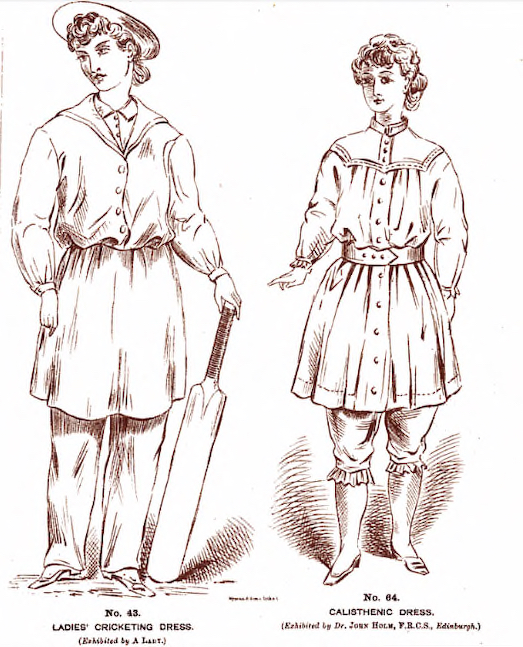
Visitors were greeted by four rows of pedestals featuring rational clothing designs, not to mention rational stockings and rational socks. There was a ladies’ cricketing dress in white serge flannel, trousers to the ankle, skirt to the knee; a white felt sou’ wester – unisex – for lawn tennis or boating; dresses for skating and climbing the Alps. Exhibitors ranged from Baroness Hilga von Kramm to Mrs Ball, a working woman from Bow.
Legs were problematic. Should they be clothed in what some called bifurcated dresses? Most of the costumes, The Times opined, were “rational down to the waist”; another newspaper paraphrased Sartor Resartus: “The beginning of all wisdom is to look fixedly at trousers”.
King was unbowed. Corsets and waistbands were falling from favour, she wrote. “Surely we have reason to hope that our emancipation has begun.”
This is an extended version of a brief piece that first appeared in History Today in May 2024.
 Mathew Lyons
Leave a comment