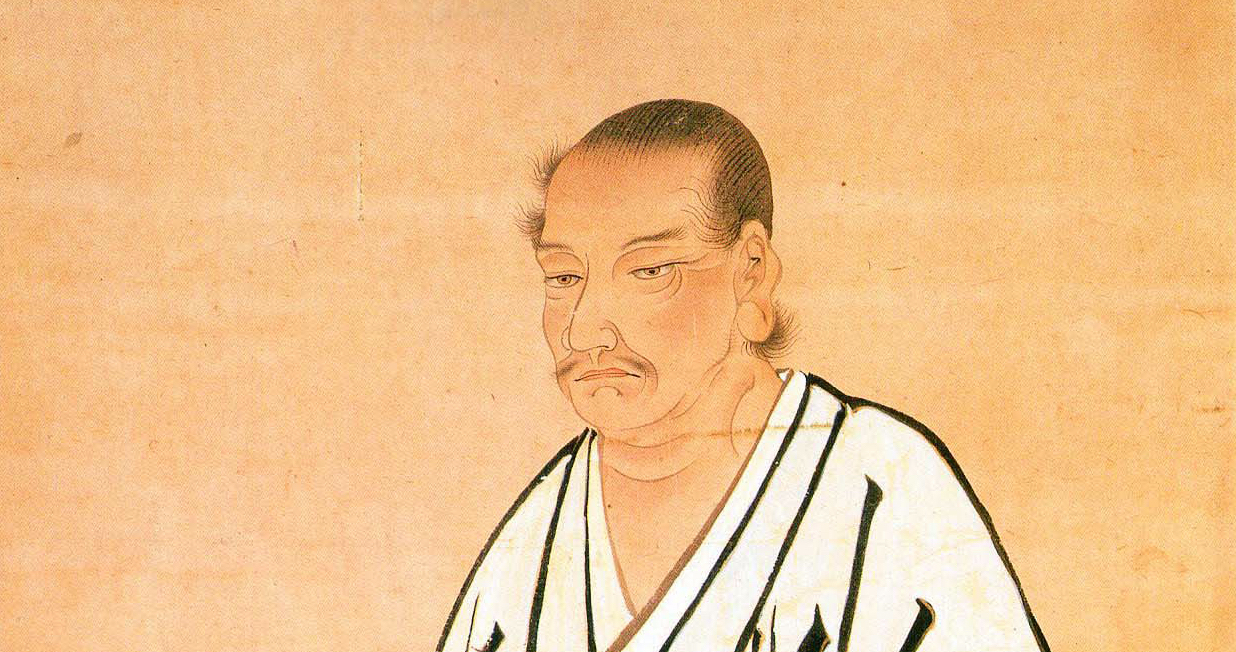
As a Samurai, Miyamoto Musashi liked to play with time. It was, in a way, a question of balance. In 1612, he had fought a duel against with Sasaki Kojiro, a swordsman known as the Demon of the Western Provinces. The agreed location was a small, uninhabited island in the Straits of Shimonoseki. Kojiro arrived on schedule, early in the dragon hours between 7am and 9am. Musashi, meanwhile, was still asleep. Roused, he ate a relaxed breakfast before asking for an oar, which he slowly carved into a long wooden sword.
It was nearly noon by the time his boat approached the shore. Musashi stepped out into the water and walked through the shallows. An angry and insulted Kojiro rushed at him, sword raised. Both men struck in the same instant. The tip of Kojiro’s sword sliced through the headscarf on Musashi’s forehead; it didn’t break the skin. Musashi’s blow knocked Kojiro flat. A second blow killed him.
Tactical lateness was an old trick. He had used it before to defeat two leading members of the Yoshioka family, who ran a successful sword school in Kyoto, in successive duels. A third duel was arranged at a temple outside the city. This time the Yoshioka took no chances; the new clan head arrived early with a hundred men intent on ambush. It was not yet light; the men still carried lanterns. This time, however, Musashi surprised them. He leapt out from behind a tree, crying “Did I keep you waiting?” He burst through their startled ranks and cut the clan head down with one blow. In the chaos he killed many more, driving the rest before him in defeat.
Musashi had fought and won his first duel aged thirteen in 1596; by the time he was thirty he was had won over 60. His life thereafter was peripatetic. He taught Niten Ichi-ryu, his own philosophy of swordsmanship. He painted. He designed the castle town at Akashi in southern-central Honshu and its temple gardens too; he did the same a little north-west around the coast at Himeji. And he wrote the book for which he is best known, the Book of Five Rings, an exposition of fighting art and of Buddhist philosophy. Four chapters are named for the elements. The fifth is named ‘Emptiness’.
Death, when it came, gave him good notice. For three years, Musashi suffered severe abdominal pain – most likely a cancer. On his death bed, he took up brush and ink one last time and wrote out the precepts of his thinking. The last one was: ‘Never depart from the way of the martial arts’. He died on 13 June 1645. He had called his last thoughts ‘The Way of Walking Alone’.
This is an extended version of a brief piece that first appeared in History Today in June 2024.
 Mathew Lyons
Leave a comment