By the end of the 11th century, Muslim Europe was in retreat. In Spain, Christian kingdoms were slowly pushing south, while in Sicily over 200 years of Islamic rule had been ended by the Norman conquest of the island. One unexpected result of this intermingling of peoples was an unparalleled assimilation of Islamic knowledge and skill into Christian architecture. The ribbed vaulting of the mosques of Toledo, for example, pre-dates use of the technique in Christian Europe by a century or more. In Palermo, Roger II, the Norman king of Sicily from 1130, used the island’s Muslim craftsmen to build his royal chapel, the Cappella Palatina, as well as the city’s cathedral. The royal master builders and carpenters in Aragon, Navarre and Valencia were often mudéjares, Muslims who remained in Christian Spain after the Reconquista. So extensive was Spanish tolerance for non-Christians that it incurred papal displeasure: “By his conduct it would appear that he loved the mosque and the synagogue more than the Church,” Innocent III complained of the Castilian king Alfonso VIII.
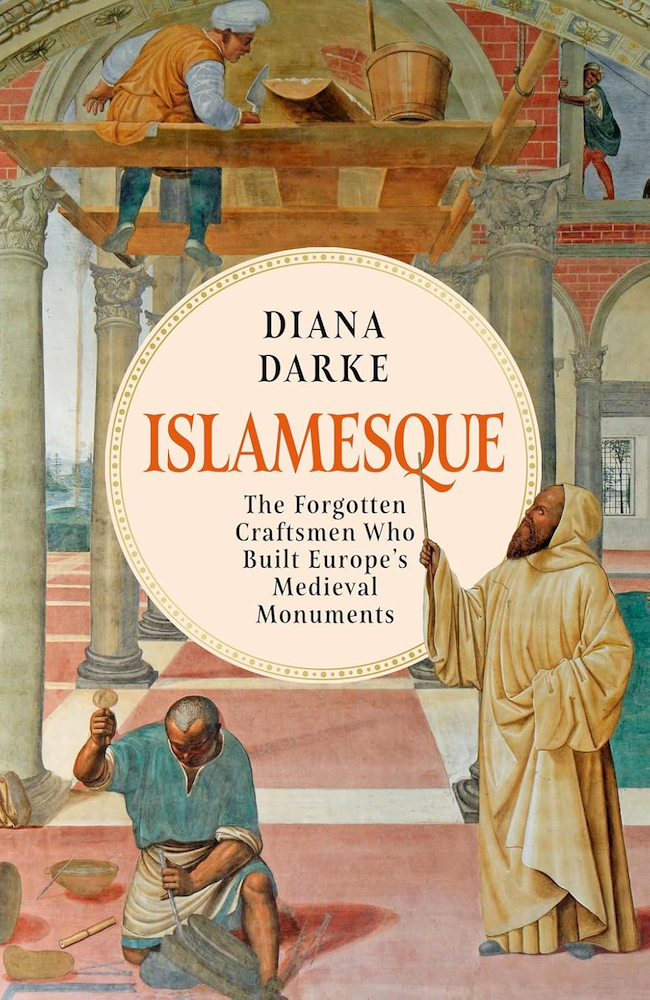
But is it true that Romanesque architecture’s debt to Muslim craftsmen is so great that we should rename the style Islamesque, as Diane Darke argues in her book of the same name? She identifies a number of features in Romanesque architecture as Islamic: the rows of decorative arches on the face of a wall known as blind arcades, for instance; or the kind of ornamental frieze comprised of alternating notches and projections known as Venetian dentil. One problem with Darke’s thesis, however, is that many of these were also found in Byzantium, the eastern half of the former Roman empire, which was still a major power at the turn of the millennium. “Like the blind arch and blind arcade,” she writes of Venetian dentil, “its origins lie well beyond Rome, and one of the first, oft-cited, examples is in the Hagia Sophia in Constantinople of 537.” Her argument that their appearance in Romanesque architecture derives wholly from Islamic rather than Byzantine culture essentially comes down to proximity – or “time and geography”, as she puts it.
Byzantine influence in the west had faded by the end of the millennium, she writes, and Islam had become the dominant culture in the Mediterranean. This elides several centuries of continuities and connections between the Christian east and west. Darke has little to say about the architecture of the the Lombards and the Franks, the Germanic peoples who dominated northern Italy and north-west Europe in the early medieval period, and she is largely disinterested in the long period during which parts of Italy were under Byzantine control. In Sicily, she downplays the existence of a large community of Byzantine Greeks, present on the island since the sixth century, under both Islamic and Norman dominion. “In no other European location… was there such a thorough mingling of Arab and Norman peoples and cultures,” she writes, as if the Byzantines weren’t there at all. Celtic art, she argues, was itself influenced by the Coptic Christian tradition; but she dismisses the idea that Celtic art might have influenced Lombard style, despite noting elsewhere the presence of Irish monastic houses in Lombardy. Even where Darke does accept Byzantine influence, such as the Anglo-Saxon churches of the late seventh century in places such as Monkwearmouth, she still insists – time and geography be damned – on identifying elements of their architecture as Islamic.
Evidence of wishful thinking abounds. Charlemagne’s Palatinate Chapel at Aachen, built by Odo of Metz, was based on the sixth-century church of San Vitale in Ravenna. Nothing is known about Odo, but he has sometimes been claimed as an Armenian Christian and there is a probably spurious story that an inscription in the dome identifies him as from ‘the Land of Noah’s Ark’. Darke seizes on this and ties it to a Catalan tradition that Noah’s ark came to rest on Mount Canigou in the Pyrenees – thus locating him in Umayyad Spain. She later speculates that similarities between the octagonal mosque in the Moorish palace at al-Jaferia and Odo’s work on the Palatine Chapel and the Carolingian Oratory of Germigny-des-Prés represent more evidence of Odo’s Catalan roots. But the al-Jaferia palace, she has already told us, was built in the eleventh century.
Another problem is that Darke wants to prove not only Romanesque’s overwhelming stylistic debt to Islamic building, but also the presence of superior Islamic workmen on site everywhere. “The world of construction and decorative crafts was dominated by Muslims in early medieval Europe,” she writes. This quickly becomes a circular argument: where high-quality work can be identified it must be evidence of an Islamic workforce.
But documentary proof is thin. The chapter on Saracen craftsmen in Britain leads with the story of Lalys, a mason “from the land of Canaan”, credited with the construction of Neath Abbey, among others; Darke herself later speculates that Lalys might have built Reading Abbey. Unfortunately, Darke’s primary source here, from which her subsequent 19th-century sources derive, is the Gwentian Chronicle, which was forged by the Welsh antiquarian Iolo Morganwg at the turn of the 19th century.
Next comes one Ulmar, a serf credited with building the priory at Castle Acre in Norfolk, who Darke says was a mason brought back from Acre in the Holy Land. She offers no better source for this statement than a local guide book; it seems open to challenge on a number of grounds. Ulmar the mason, with a garden and fifteen acres of land in Acre, is indeed mentioned in the priory’s cartulary; but Castle Acre takes its name from the Anglo-Saxon village of Acre, which is in the Domesday Book, not the city in modern-day Israel. In any event, the priory was founded in the late 1080s, the first crusade wouldn’t begin until 1096, and the city of Acre wouldn’t fall until 1104. Moreover, neither of the priory’s founders were crusaders. Then we have the story that Biddulph Moor in Staffordshire takes its name from another Saracen brought back from the crusades, a piece of folklore which Darke can only trace back to 1862. (The less said about her attempt to adduce JL Carr’s 1980 novel A Month in the Country in support of her argument the better.) The seriousness with which such lacklustre evidence is presented severely weakens the reader’s confidence in assertions made elsewhere.
Medieval Europe undoubtedly owed a great deal to Arab learning, and the achievements of Islamic architects, masons and sculptors in Spain and Sicily are unarguable. Somewhere in Islamesque is the material for a nuanced survey of medieval architecture’s real debt to Islamic engineering and art; but by overstating her case at every turn, Darke makes it much too difficult to identify the good evidence among the bad.
This is an extended version of a review that first appeared in the Daily Telegraph.
 Mathew Lyons
Leave a comment