On the night of September 25 1828, a small group of armed men approached the presidential palace in Bogotá. Inside, Simón Bolívar lay in bed asleep beside his mistress, Manuela Sáenz. Bolívar – known as El Liberator – had led large parts of South America to freedom from imperial Spain, but his increasingly autocratic, anti-republican... Continue Reading →
Gustav Vasa, the Stockholm Bloodbath and the end of a European union
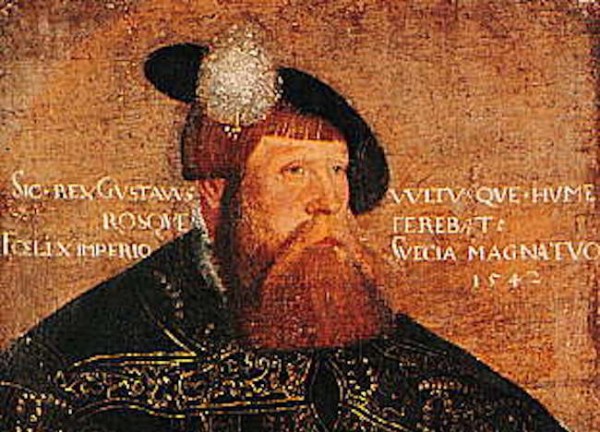
A decades-long union of European countries is supported by the respective national elites; but its destruction comes through the ruthless exploitation of popular nationalism by an autocratic leader. Does that sound familiar? It is, of course, the Kalmar Union between Denmark, Norway and Sweden, which saw the three kingdoms being governed under a single monarch... Continue Reading →
The Life and Death of Colonel Blimp: the film Churchill tried to kill
It’s 10 September 1942. The German army is at Stalingrad. Bomber Command is sending 479 planes to bomb Düsseldorf. And Winston Churchill is writing to Brendan Bracken, his Minister of Information, about a British film already in production. “[P]ropose to me the measures necessary to stop this foolish production before it gets any further,” he... Continue Reading →
The pioneering archaeologist Dorothy Garrod
On 6 May 1939 the pioneering archaeologist Dorothy Garrod was elected to the Disney chair of archaeology at Cambridge. She was the first woman to be a professor at either Oxford or Cambridge; women were still not admitted to full degrees at the university – despite having been educated there since 1869. Her election brought... Continue Reading →
From Africa to Canterbury: the first remaking of the English church
Five of the first six archbishops of Canterbury to be consecrated were not native to this country. None came from as far afield as the seventh: Theodore, born in 602, was a Greek-speaking monk from Tarsus – the modern Turkish city of Gözlü Kule – in what was then a Byzantine province. Educated in Antioch... Continue Reading →