The visions began when Hildegard of Bingen was young – perhaps as young as three. But unlike many mystical religious experiences, the visions did not come in dreams or ecstatic states; ecstasy, she thought, was a defect. They came like a cloud of light inside her on which forms and shadows moved while her eyes... Continue Reading →
Ahilyabai Holkar: a philosopher queen remembered
Ahilyabai Holkar, queen of the Malwa kingdom in north-west central India, part of the Maratha empire, died on 13 August 1795, having reigned for nearly thirty years. She came to power in 1767 after the deaths of her father in law, Malhar Rao Holkar, and her young, sickly son. (Her husband had died in battle... Continue Reading →
Poetry news: Dust
I have a poem – The Thing With Broken People – in the September 2020 Portrait issue of Dust magazine.
Hans Holbein: The Artist in a Changing World by Jeanne Nuechterlein
In Augsburg’s Staatsgalerie Altdeutsche Meister there is a three-paneled painting illustrating the life of St Paul, painted by local artist Hans Holbein the Elder in 1504. Commissioned for the city’s Dominican convent of St Katherine, it includes, in its left panel, a self-portrait of the artist with his two sons, Hans and Ambrosius – nicknamed,... Continue Reading →
When graduates voted twice
With support for the EU significantly higher among those with a university education, it’s interesting to recall that well into the 20th century graduates could vote twice in UK general elections: once in their local constituencies and again through their universities, which at one point held fourteen seats between them. The idea that universities should... Continue Reading →
Manuela Sáenz: the Liberator’s saviour
On the night of September 25 1828, a small group of armed men approached the presidential palace in Bogotá. Inside, Simón Bolívar lay in bed asleep beside his mistress, Manuela Sáenz. Bolívar – known as El Liberator – had led large parts of South America to freedom from imperial Spain, but his increasingly autocratic, anti-republican... Continue Reading →
Poetry news: Dawn Treader
I have a poem – The Oyster, Love – in the summer issue of Dawn Treader magazine. You can read it online here.
Utopia Avenue by David Mitchell
In ‘The Ghastly Ordeal of Timothy Cavendish’, one of the stories that make up Cloud Atlas, David Mitchell’s best-known work, the eponymous narrator is in a taxi when he hears a song on the radio "about how everything that dies some day comes back". (The song isn’t named, but it’s Bruce Springsteen’s Atlantic City.) Popular... Continue Reading →
An Indifference of Birds by Richard Smyth
Every winter, white storks – so elegant in the air, so rickety on land – make the long flight south from Europe to what we assume to be ancestral wetlands in sub-Saharan Africa. At least, that’s what most of them do. These days there’s one who disdains the long-haul option, preferring to hop across from... Continue Reading →
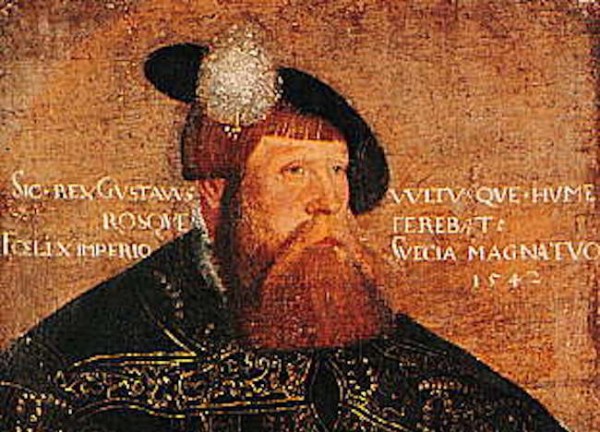
Gustav Vasa, the Stockholm Bloodbath and the end of a European union
A decades-long union of European countries is supported by the respective national elites; but its destruction comes through the ruthless exploitation of popular nationalism by an autocratic leader. Does that sound familiar? It is, of course, the Kalmar Union between Denmark, Norway and Sweden, which saw the three kingdoms being governed under a single monarch... Continue Reading →
The Life and Death of Colonel Blimp: the film Churchill tried to kill
It’s 10 September 1942. The German army is at Stalingrad. Bomber Command is sending 479 planes to bomb Düsseldorf. And Winston Churchill is writing to Brendan Bracken, his Minister of Information, about a British film already in production. “[P]ropose to me the measures necessary to stop this foolish production before it gets any further,” he... Continue Reading →
Sons of the Waves: The Common Seaman in the Heroic Age of Sail by Stephen Taylor
At their peak, early in the 19th century, there were some 262,427 of them across Britain’s naval and merchant fleets. People called them Jacks, but they are nameless mostly. Or nameless to history. Even on surviving musters, their identities can be hidden behind pseudonyms. Some of these – George Million or Jacob Blackbeard, say –... Continue Reading →
The pioneering archaeologist Dorothy Garrod
On 6 May 1939 the pioneering archaeologist Dorothy Garrod was elected to the Disney chair of archaeology at Cambridge. She was the first woman to be a professor at either Oxford or Cambridge; women were still not admitted to full degrees at the university – despite having been educated there since 1869. Her election brought... Continue Reading →
From Africa to Canterbury: the first remaking of the English church
Five of the first six archbishops of Canterbury to be consecrated were not native to this country. None came from as far afield as the seventh: Theodore, born in 602, was a Greek-speaking monk from Tarsus – the modern Turkish city of Gözlü Kule – in what was then a Byzantine province. Educated in Antioch... Continue Reading →
A New Day Yesterday: UK Progressive Rock and the 1970s by Mike Barnes
It’s early 1974, British band Henry Cow is in the studio recording its second album, Unrest. One track features a 40-foot tape loop. Another is based on the Fibonacci sequence, a structural device borrowed from Karlheinz Stockhausen. The track is in 55/8 time. Henry Cow’s ethos is based on creating music it isn’t yet competent... Continue Reading →
Dead Famous: An Unexpected History of Celebrity by Greg Jenner
On Guy Fawkes’ Night in 1709, Henry Sacheverell, an Anglican minister, preached an incediary sermon in St Paul’s against religious non-conformity in the church. It was widely interpreted as a coded attack on the then Whig government, not least by the government itself, which attempted to have Sacheverell tried for sedition. Whatever his other talents,... Continue Reading →
Living through lockdown: Julian of Norwich, TS Eliot and the life-shaped hole in our hearts
For those who don't feel inclined to watch the film I made for A Bit Lit on life during lockdown, here's a rough transcript. My name is Mathew Lyons, and I am a freelance writer and historian. In practice, that means I am lucky enough to mostly work from home. Sometimes I work on the... Continue Reading →
The life-shaped hole in our hearts: lockdown, solace and cultural memory
A couple of weeks ago I was invited to contribute a brief film to the A Bit Lit YouTube channel, created by Andy Kesson and others as a forum for thoughts on literature, history and culture during lockdown. So here I am, talking about freedom and confinement, about emotional and spiritual spaces, about monasticism and... Continue Reading →
Book Parts, edited by Dennis Duncan and Adam Smyth
In 1723 the London bookseller Thomas Graves published a 12-page pamphlet entitled The First of April. Written in praise of the author of a recent poem named Ridotto, or Downfal of Masquerades, it comprises a title page, a six-page dedicatory epistle, and The First of April itself, a three-page poem. There is an an attractive... Continue Reading →
Sailing School: Navigating Science and Skill 1550-1800 by Margaret E Schotte
On Christmas Eve, 1789, HMS Guardian found itself in the shadow of two great icebergs some 1,300 miles south-east of the Cape of Good Hope. The ship’s captain, 29-year-old Edward Riou, ordered a double watch be kept, but, engulfed in fog and with darkness falling, the Guardian struck one all the same. The collision tore... Continue Reading →