His name was Hugh Donald McIntosh. An Australia-born entrepreneur he was a sometime fight promoter, theatrical producer and newspaper magnate. But by 1935 he was a recovering bankrupt. Previous attempts to resurrect his fortune included an angora rabbit farm and a cake shop. Now the man they called ‘Huge Deal’ McIntosh had a better idea. Milk.
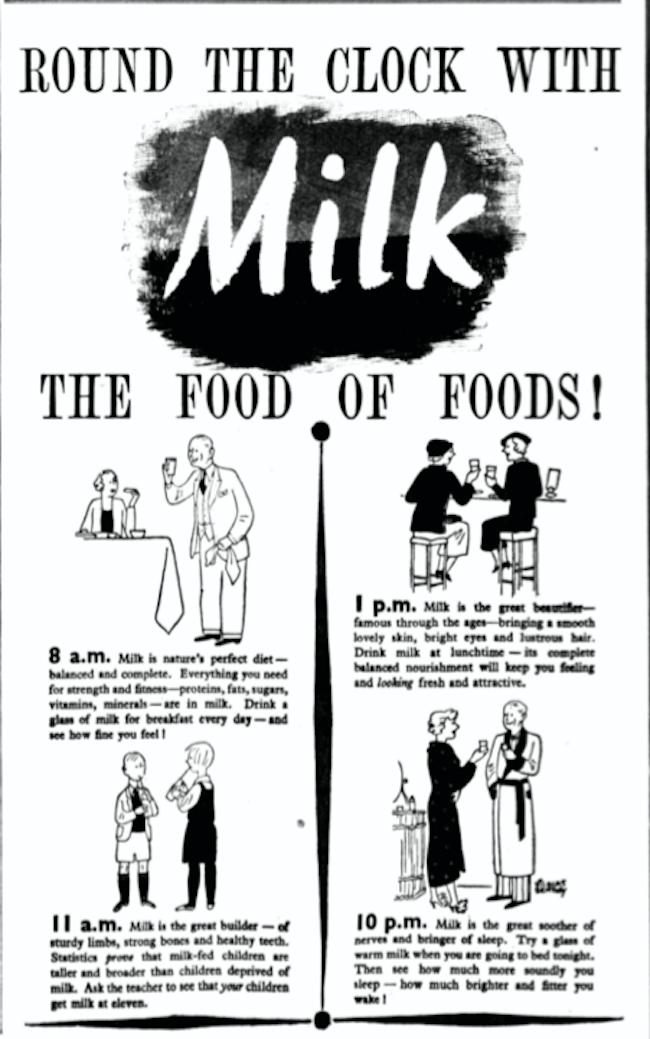
On August 1 1935 he opened the first milk bar in London on Fleet Street. Called the Black and White Bar, it offered 50 different non-alcoholic milk-based drinks: malted milks, yeast milks, fruit phosphates, shakes, cocktails and ice cream. The milk cocktails had dramatic names like Bandit’s Prize and Blackstocking that belied their essential benignity – even if you were the adventurous sort who took yours with a dash of nutmeg on top.
There were now more milk bars in Sydney, the Daily Herald reported, than there were pubs. An Edinburgh reporter visited the Black and White a few weeks later. He found it, to his surprise, “filled with men (yes, real he-men, not milksops or women)”. Perhaps McIntosh was onto something. Certainly he dreamt big. There would soon be 500 milk bars around the UK, he said.
Across the country, entrepreneurs rushed to copy the idea. The local papers were full of them, from Belfast to Birmingham and Fife. It was “the craze of the age”, an ad in the South Shields Gazette called it.
In places the craze lasted. Teddy Boys were still congregating in milk bars in the mid-1950s. But McIntosh didn’t live to see it. His venture went under in November 1938 and he died broke four years later.
This is an extended version of a brief piece that first appeared in the August 2024 issue of History Today.
 Mathew Lyons