Film-maker Temujin Doran contacted me in the summer of 2010 with the intention of making a film based on The Balloonist’s Tale in my book Impossible Journeys, which recounted the failed 1897 attempt by Salomon August Andrée to reach the North Pole by hot air balloon. In the end, Doran decided to make a different... Continue Reading →
The Dutch Church: the dissolution and its tragic aftermath

It is convenient for historians to conceive of history in neat discrete categories, but all too often that approach both obscures continuities and suggests that events are less brutally random than they are. There are, for instance, many ways of writing about the influence of the English Reformation and the dissolution of the monasteries on... Continue Reading →
My Facebook author page
Just a brief post to note that I've just set up a Facebook author page, which will hopefully complement my blog and Twitter feed – as well as overlap in places! Do come and say hello: it's great to get to know people and keep in touch. Any suggestions are always welcome.
Ralegh’s reputation in the 20th century
This article first appeared in the July issue of History Today. It was part of the magazine's regular 'From the Archives' feature, and is a response to an excellent 1998 essay by Robert Lawson-Peebles titled 'The Many Faces of Sir Walter Ralegh', which traced Ralegh's reputation through history. Lawson-Peebles essay can be viewed in History... Continue Reading →
The Hollow Crown: Q&A

After the screening of both parts of Henry IV at the BFI on July 2 – reviewed here – Sam Mendes led a Q&A with the director Sir Richard Eyre and Simon Russell Beale, who played Falstaff. Richard Eyre explained that Henry IV parts I and II were his second favourite Shakespeare plays after King... Continue Reading →
Review: The Hollow Crown: Henry IV parts I and II

Once again, I was fortunate enough to be invited to a BFI screening of two films in the BBC’s new Hollow Crown season, Henry IV parts I and II, both directed by Sir Richard Eyre. There was a Q&A afterwards in which executive producer Sam Mendes interviewed Eyre and Simon Russell Beale, who stars as... Continue Reading →
Review: The Hollow Crown: Richard II

The BBC’s new adaptation of Shakespeare’s Henriad quartet of history plays, broadcast under the title The Hollow Crown, began with Richard II, directed by Rupert Goold and adapted by Goold and his longstanding colleague in the theatre Ben Power. There is a saying - I associate it with John Huston, but I have seen it... Continue Reading →
Richard Topcliffe: the Queen’s torturer
There is no known portrait of Richard Topcliffe, the man most associated with the torture and persecution of Catholics in Elizabethan England. In some respects that is as it should be: those who break human bodies on behalf of the state are usually anonymous, ordinary figures, extraordinary only in the apparent disjunction between their personal... Continue Reading →
Richard Topcliffe and the capture and torture of Robert Southwell
The capture and torture of Southwell is a perfect example of Topcliffe’s full-service approach to persecution: it was his own handiwork through and through, and took extensive planning and thought. Southwell, a Norfolk man, had left England for the Catholic English College at Douai in the summer of 1576. He was not yet 15. Two... Continue Reading →
Review: The Hollow Crown: Henry V
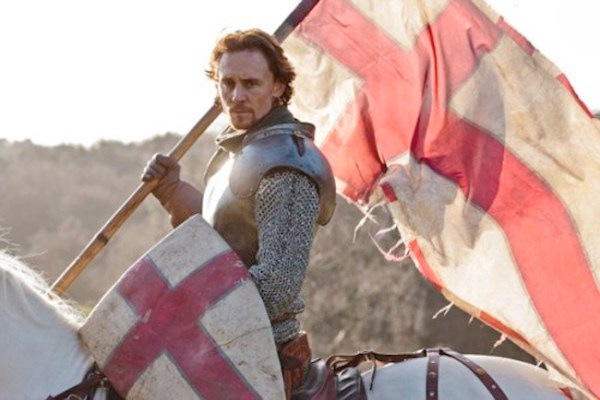
I was privileged to be invited to a screening at the British Museum on Friday night of the new BBC film version of Henry V, the fourth part of its Hollow Crown tetralogy, which also includes Richard II and Henry IV parts I and II. The season is a BBC co-production with Sam Mendes’ Neal... Continue Reading →
Out now in paperback: The Favourite
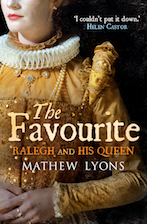
The Favourite, my book about the relationship between Elizabeth I and Sir Walter Ralegh, is now out in paperback through Constable. The new edition includes a lengthy afterword taking the story through to the end of Ralegh's life in 1618. 'The Favourite is wonderful. Elegant and intriguing – a seductive portrait of a fascinating relationship. I couldn’t... Continue Reading →
Ben Jonson: his early life and how it shaped him

Contrary as always, Ben Jonson could cast horoscopes – but didn’t believe in them. What, then, would he have made of his own? In some ways, perhaps, he was born lucky: winter offered the worst chances of survival for an Elizabethan baby; Jonson was born in midsummer. Even so, he was fortunate to survive. One... Continue Reading →
Street theatre and survivals of the ritual year in Shakespeare’s Stratford
The Guild Hall was the principal venue in Stratford for visiting troupes of players, who would perform beneath the room where Shakespeare and his fellow schoolboys laboured. But at many Elizabethan schools, performing plays formed part of the curriculum. It was true of prestigious schools such as Westminster, where Ben Jonson studied, Merchant Taylors in... Continue Reading →
Interview: On the Tudor Trail
Natalie Grueninger (follow her on Twitter), who runs the excellent On The Tudor Trail website, has just posted her interview with me about The Favourite, which will be out in paperback on 21 June. I really enjoyed answering Natalie's questions and I hope that comes across in my responses. The interview can be read here.
Shakespeare, England and me: a blog for Shakespeare’s birthday

To mark the 2012 anniversary of Shakespeare's birth, I have written a post exploring my interest in Shakespeare and trying to define what I am looking for when writing about him. It is necessarily more personal, in parts, than my other posts; forgive me if it seems indulgently so. One of the great 20th Shakespearean... Continue Reading →
A Visitor’s Companion to Tudor England by Suzannah Lipscomb

It was with a certain amount of trepidation that I approached Suzannah Lipscomb’s latest book. Was it really necessary? Did the world need another guide book to the historic buildings of England? Would she not be forced into tiresome iterations of ‘We can imagine…’ or ‘If one closes one’s eyes one can almost hear…’ and... Continue Reading →
The Crown by Nancy Bilyeau

The Crown is the début novel by American journalist and writer Nancy Bilyeau. Set in the aftermath of the Pilgrimage of Grace – and in particular the reprisals that followed its suppression - and against the backdrop of the dissolution of monasteries, its central character is Joanna Stafford, a young novice at Dartford Priory in... Continue Reading →
Shakespeare, the lost years and the London stage

It is usually said that Shakespeare re-emerges from ‘the lost years’ with Robert Greene’s flighted asides in Groatsworth of Wit, published in 1592 (and possibly the work of its editor, Henry Chettle), and which I quoted in an earlier post. Although it has sometimes been argued that Greene may not be having at Shakespeare here,... Continue Reading →
Shakespeare: the lost years

Most biographies of Shakespeare have traditionally wafted the young man directly from Stratford to London, presuming that the capital’s dominance of the English theatre which Shakespeare would help establish in the 1590s – and which lasts to this day – also held true for the 1580s. But that is not necessarily so. The truth is,... Continue Reading →
Shakespeare, Catholicism and pre-Reformation festive culture

It is hard to overstate the volume and variety of entertainers whom one might have encountered on England’s roads in the early 1500s. But then, it’s a phenomenon that we’re viewing through the filter of what occurred later, around the turn of the century and after, when theatrical and performance culture was forcibly narrowed, shaped... Continue Reading →
 Mathew Lyons