In late November 1935, Virginia Woolf went to see a production of Romeo and Juliet. She was not overly impressed. “Acting it,” she wrote, “they spoil the poetry”. Harsh words, you might think, for a cast that included John Gielgud, Laurence Olivier and Peggy Ashcroft. But Shakespeare on the stage was always something of a... Continue Reading →
John Payne Collier: literary fraud, literary slug
John Payne Collier. Three words sure to chill the heart of any scholar working on early-modern literary texts. Why? Because Collier was that most interesting of phenomena: a fine scholar who was also a first-class fraud. It is to posterity’s chagrin that he lived to the age of 94 – Collier died on 17 September... Continue Reading →
Mary, Countess of Pembroke: poetry, patronage and power
This is, more or less, the text of the talk I gave earlier this month at the Wilton History Festival. Mary, Countess of Pembroke, and her sons William and Philip, were the most influential patrons of the Elizabethan and Jacobean era. Let’s begin with a story to illustrate that assertion. For the moment, we will... Continue Reading →
Of God and Jonson: theatre history, new things and non-events
I was fortunate to be able to attend some of the superb Before Shakespeare conference at Roehampton last week. I came away with a range of thoughts and ideas, some of which I hope to pursue in one form or another. Perhaps the thing that struck me most, however, was Bill Ingram’s opening talk. Ingram... Continue Reading →
Shakespeare in London by Hannah Crawforth, Sarah Dustagheer and Jennifer Young
The world might be forgiven for rolling its eyes at the prospect of another book on Shakespeare. Does Shakespeare in London, the latest addition to the Bloomsbury Arden list, have anything new to say? The answer is a confident yes. Shakespeare in London is a short book with big ambitions. It weaves together various narratives... Continue Reading →
Country Life, Shakespeare and midsummer madness
Like most people, I suspect, I was surprised by the news that someone had discovered a contemporary portrait of Shakespeare. And bemused, too, that they would chose to reveal the fact in Country Life. My heart sank, though, when I saw that the case relied on ciphers. I am sure there are carefree souls for... Continue Reading →
Shakespeare, the Blackfriars and the theatre of experience
It has always bemused me that there is so little formal – or, for that matter, informal – dialogue and collaboration between historians and literary scholars. Each are aware of the others’ work, certainly; but the intellectual, cultural and administrative inheritances that maintain the academic silos of schools and faculties surely seem increasingly outdated in... Continue Reading →
John Lyly and Early Modern Authorship: an interview with Andy Kesson
Last week saw the launch of Andy Kesson’s brilliant new book John Lyly and Early Modern Authorship, which makes an eloquent and powerful case for both the quality of Lyly’s work and its importance to early modern literature as we understand it. It is full of fascinating insights into literary and print culture and commerce... Continue Reading →
In search of lost time
If we think of time at all, it is as a dimension: something we travel through, an abstract and universal measure against which we mark our progress, and against which we are judged – from minute to minute, from hour to hour, from day to day, from birth to death. It dominates our lives; and... Continue Reading →
The Dutch Church: the dissolution and its tragic aftermath
It is convenient for historians to conceive of history in neat discrete categories, but all too often that approach both obscures continuities and suggests that events are less brutally random than they are. There are, for instance, many ways of writing about the influence of the English Reformation and the dissolution of the monasteries on... Continue Reading →
The Hollow Crown: Q&A
After the screening of both parts of Henry IV at the BFI on July 2 – reviewed here – Sam Mendes led a Q&A with the director Sir Richard Eyre and Simon Russell Beale, who played Falstaff. Richard Eyre explained that Henry IV parts I and II were his second favourite Shakespeare plays after King... Continue Reading →
Review: The Hollow Crown: Henry IV parts I and II
Once again, I was fortunate enough to be invited to a BFI screening of two films in the BBC’s new Hollow Crown season, Henry IV parts I and II, both directed by Sir Richard Eyre. There was a Q&A afterwards in which executive producer Sam Mendes interviewed Eyre and Simon Russell Beale, who stars as... Continue Reading →
Review: The Hollow Crown: Richard II
The BBC’s new adaptation of Shakespeare’s Henriad quartet of history plays, broadcast under the title The Hollow Crown, began with Richard II, directed by Rupert Goold and adapted by Goold and his longstanding colleague in the theatre Ben Power. There is a saying - I associate it with John Huston, but I have seen it... Continue Reading →
Review: The Hollow Crown: Henry V
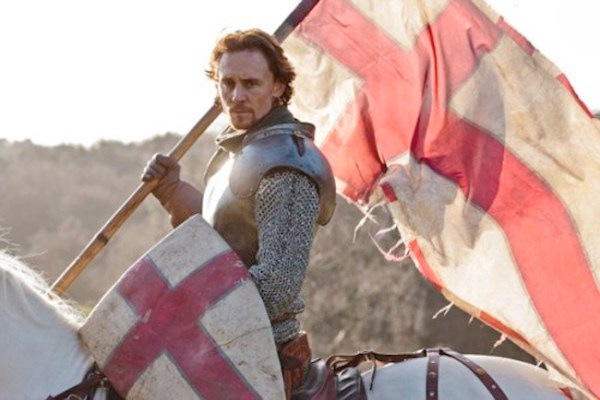
I was privileged to be invited to a screening at the British Museum on Friday night of the new BBC film version of Henry V, the fourth part of its Hollow Crown tetralogy, which also includes Richard II and Henry IV parts I and II. The season is a BBC co-production with Sam Mendes’ Neal... Continue Reading →
Ben Jonson: his early life and how it shaped him
Contrary as always, Ben Jonson could cast horoscopes – but didn’t believe in them. What, then, would he have made of his own? In some ways, perhaps, he was born lucky: winter offered the worst chances of survival for an Elizabethan baby; Jonson was born in midsummer. Even so, he was fortunate to survive. One... Continue Reading →
Street theatre and survivals of the ritual year in Shakespeare’s Stratford
The Guild Hall was the principal venue in Stratford for visiting troupes of players, who would perform beneath the room where Shakespeare and his fellow schoolboys laboured. But at many Elizabethan schools, performing plays formed part of the curriculum. It was true of prestigious schools such as Westminster, where Ben Jonson studied, Merchant Taylors in... Continue Reading →
Shakespeare, England and me: a blog for Shakespeare’s birthday
To mark the 2012 anniversary of Shakespeare's birth, I have written a post exploring my interest in Shakespeare and trying to define what I am looking for when writing about him. It is necessarily more personal, in parts, than my other posts; forgive me if it seems indulgently so. One of the great 20th Shakespearean... Continue Reading →
Shakespeare: the lost years
Most biographies of Shakespeare have traditionally wafted the young man directly from Stratford to London, presuming that the capital’s dominance of the English theatre which Shakespeare would help establish in the 1590s – and which lasts to this day – also held true for the 1580s. But that is not necessarily so. The truth is,... Continue Reading →
Shakespeare, Catholicism and pre-Reformation festive culture
It is hard to overstate the volume and variety of entertainers whom one might have encountered on England’s roads in the early 1500s. But then, it’s a phenomenon that we’re viewing through the filter of what occurred later, around the turn of the century and after, when theatrical and performance culture was forcibly narrowed, shaped... Continue Reading →
Re-imagining Elizabethan London
Hollar's "Exact Surveigh" of 1667 I have lived in London most of my life, and one of the pleasures for me in researching and writing The Favourite, an exploration of the relationship between Elizabeth I and Walter Ralegh, is that so much of their story is also a London story. Or, more accurately, London is... Continue Reading →